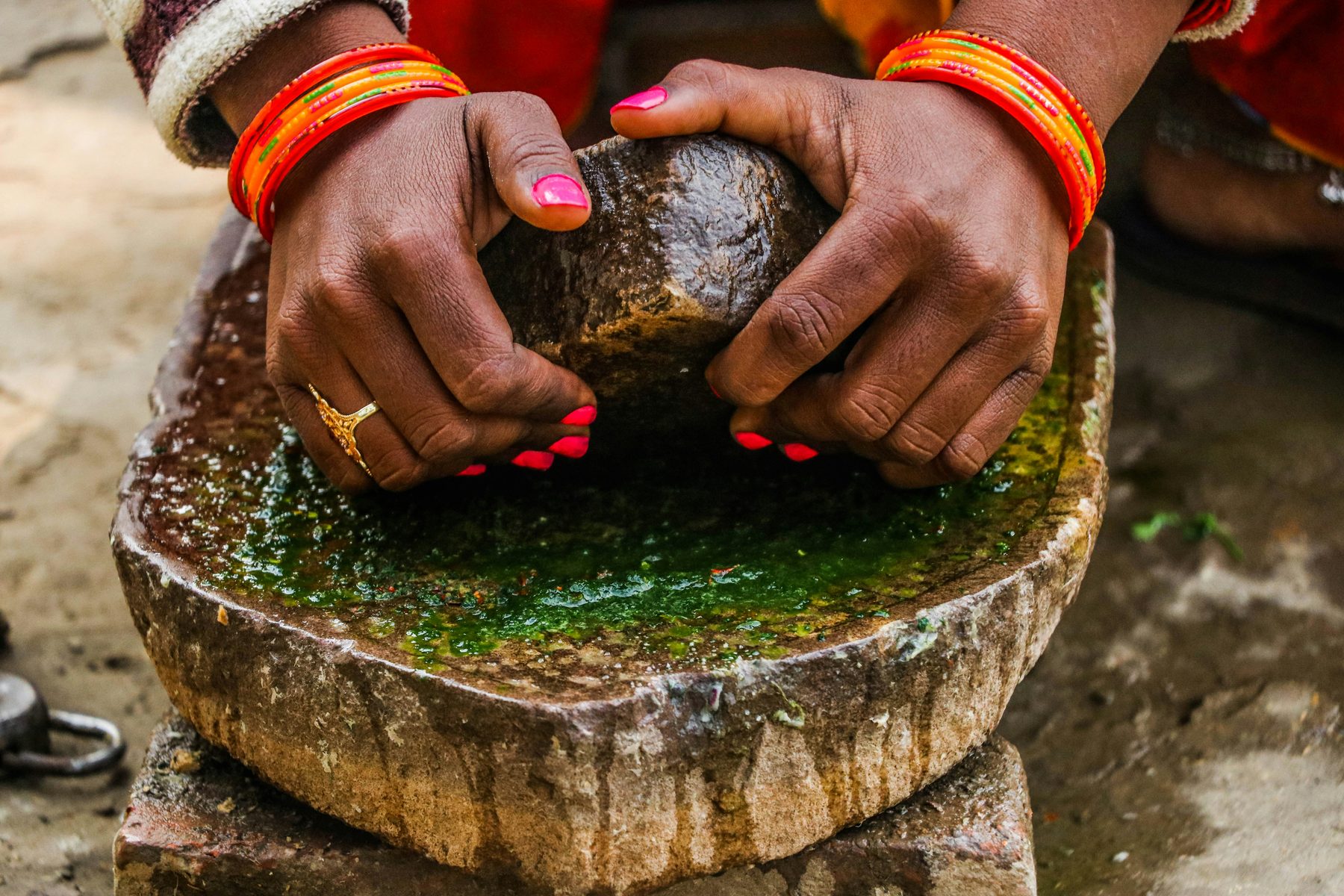
Somewhere in the past century, beauty became fast. Promises grew louder and ingredients grew smaller. Products arrived in waves — each one claiming to solve everything, none of them pausing long enough to ask what the skin truly needed.
Ayurveda never worked that way. It believed in observation over speed, in patience over promises. The great physicians — Charaka, Sushruta, Vagbhata — did not prescribe formulas in isolation. They prescribed relationships: between a person, their constitution, their season, their soil.
Kashvi exists to return to that relationship. Not as a revival, not as nostalgia — but as a living practice. Every formulation here is a bridge between a text written centuries ago and a morning ritual happening right now.
We did not build a skincare house. We built a house for forgotten wisdom — so that it may keep living, one ritual at a time.
The forests of ancient India were not merely landscapes — they were archives. Rishis in the Himalayan foothills, the Deccan plateau and the coastal groves observed plants for generations, testing and recording with a rigour that would not be called unscientific today.
They noticed that neem purified water when its branches were submerged. That saffron, picked in the early dawn before the stamens wilted, held a potency that midday picking destroyed. That sandalwood, taken only from heartwood decades old, cooled inflammation that younger cuts could not. These were not accidents. They were centuries of patient inquiry.
The Charaka Samhita describes over 700 herbal preparations. The Sushruta Samhita catalogs surgical and cosmetic uses of plants that modern researchers are still studying. The forests of Bharat were not mystical — they were methodical.
In the hymns of the Atharvaveda, healers sang of herbs as living allies. Ayur — life. Veda — knowledge. These were not metaphors. They were the working vocabulary of people who had spent generations in forests, watching what healed and what harmed. The knowledge of life itself was born in hermitages, not workshops.
Charaka wrote of internal medicine; Sushruta, of surgery. Together their samhitas codified centuries of oral knowledge into systematic science — classification of plants, preparation methods, seasonal protocols. In these texts appear formulations we still craft today, including the legendary kumkumadi tailam, the saffron elixir that classical physicians called the finest of all radiance preparations.
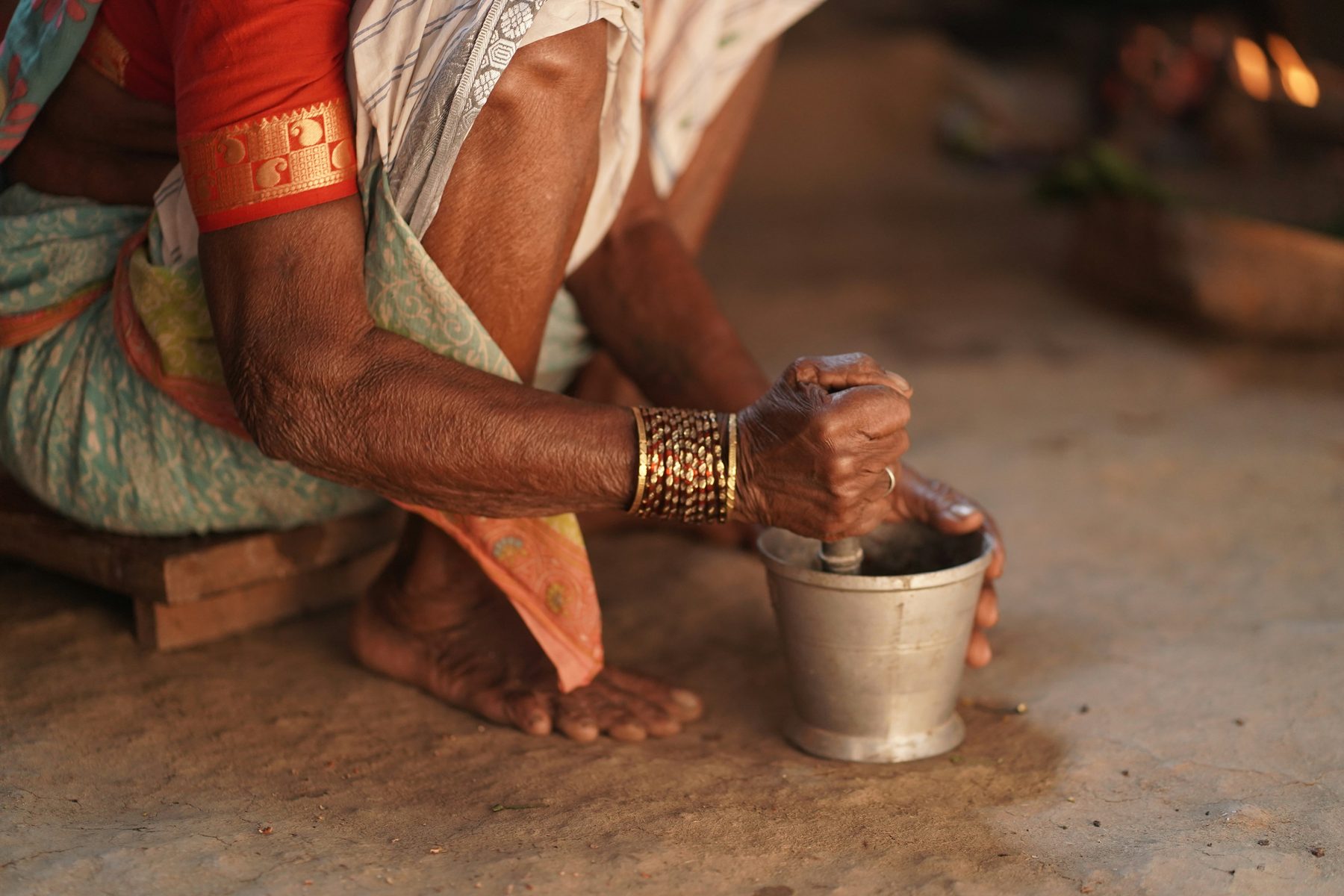
When the great academies receded, the knowledge moved into kitchens. The grandmother's ubtan before a wedding, the vaidya's neem twig at the village well, the winter abhyanga with sesame oil — these were not mere habits. They were a distributed archive, encoded in hands rather than pages. Ayurveda survived because families practised it as ritual, not prescription, as devotion, not transaction.
Ayurveda crossed oceans. Arab traders carried Indian spices and formulations westward along the same routes that brought silk and pepper. In royal courts from Persia to Vijayanagara, kumkumadi and chandanadi were luxuries of queens — beauty rituals woven into statecraft and ceremony. The Siddha and Unani systems intertwined with Ayurvedic knowledge, each enriching the other across borders that did not yet exist.
Colonial rule dismissed indigenous medicine as superstition. Textbooks were rewritten, practitioners sidelined. Forests that had been managed by communities for centuries were reclassified as Crown property. Yet in every village courtyard, grandmothers kept mixing ubtan, pressing amla oil, teaching daughters the rituals the empire could not see. Ayurveda survived not in institutions but in hands — passed quietly, stubbornly, from mother to daughter across a hundred years of forgetting.
Independent India recognised Ayurveda formally — the AYUSH ministry, research institutes, GMP-certified manufacturing. Ayurvedic preparations lined supermarket shelves. But something was lost in the scaling. The personal touch, the small-batch care, the forest connection — the sense that a formula was made for a person, not a market. Mass production made Ayurveda available everywhere and, in doing so, forgot to keep it sacred.
Small batches. Cold-pressed oils. Herbs from the regions the old texts named — saffron from Pampore, sandalwood from Mysuru, amla from the Gangetic plains. We did not modernise Ayurveda; we refused to. We simply gave the forest a way to reach your shelf — as it was always meant to, in a form you can hold, in a ritual you can practice, in a remembrance that does not fade.
Written in the forest,
Mumbai, 2026
There is a moment every morning — just before the city begins — when everything is still. It might be the sound of a vessel of water being carried, or the particular quality of early light on a leaf, or simply the smell of something green and alive. This is the moment Kashvi was made for.
We built this house because we kept losing that moment. Because the speed of modern life had made beauty into another urgency, and we believed it should be the opposite — a pause, a ceremony, a return.
Every formula in our apothecary began not in a laboratory but in a text. We read the classical physicians slowly, the way they intended to be read. We sourced from the places they named. We cold-pressed and small-batched and refused to simplify what was meant to be complex.
We are not a company. We are a house — a house that keeps an archive of India's oldest beauty knowledge so that it may keep reaching new hands, new mornings, new rituals. The forest remembers. So do we.

The House of Kashvi
"We do not preserve recipes.
We preserve remembrance."