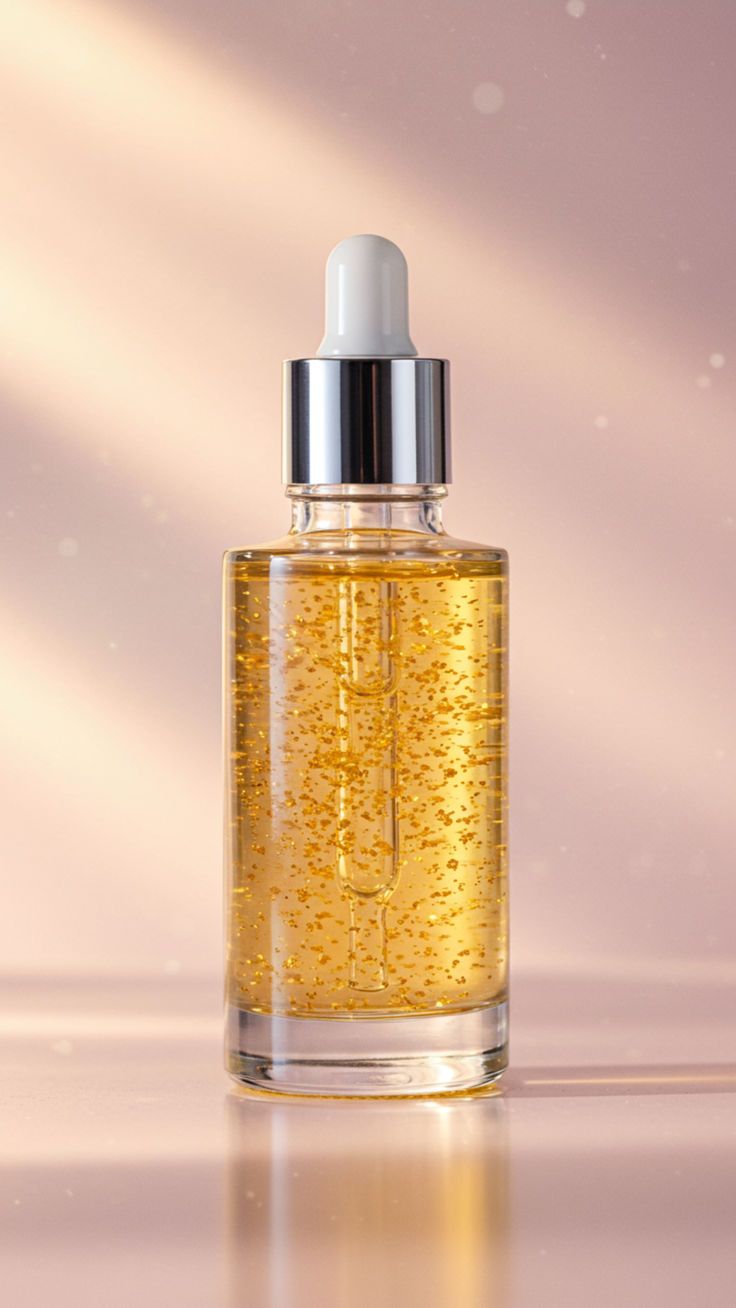

There is a preparation in Ayurvedic pharmacopoeia that has been made continuously for at least 1,200 years. It was prescribed for queens. It required 16 specific ingredients, pressed together over 40 days, applied nightly in slow circles to the face. The texts called it the finest of all radiance preparations.
Its name is Kumkumadi tailam. Kunkuma is saffron. Adi means "and the others." Saffron, and the others.
The Text
Kumkumadi tailam appears in the Ashtanga Hridayam — a comprehensive medical text composed by Vagbhata, probably in the 7th century CE, synthesising all major Ayurvedic knowledge preceding it. The preparation is classified under mukha lepa: face applications. The Ashtanga Hridayam is precise about the ingredients, their proportions, and the method of preparation. It specifies the intended outcomes: varna prasadana — complexion brightening. Kanti vardhana — enhancement of inner radiance.
These are not cosmetic promises. They are clinical classifications within a system that understood radiance as a sign of internal health, not a surface application. The skin, in Ayurvedic philosophy, reflects the state of the deeper tissues and the balance of the doshas.
The Ingredients
The classical formulation lists sixteen primary botanicals, anchored by saffron. Each herb was selected for a specific role in the preparation's cumulative effect:
Kesar (Crocus sativus) — The lead ingredient. One gram requires approximately 150 flowers, hand-picked at dawn before the stamens wilt. The Charaka Samhita prescribes kesar specifically for varna (complexion) brightening and pitta pacification. It is among the only spices in classical Ayurveda that is simultaneously a pigment, an adaptogen, and an anti-inflammatory agent.
Chandana (Sandalwood) — Prescribed as Ayurveda's most cooling wood. In kumkumadi, it counterbalances saffron's warming properties, making the formulation usable across doshas. Classical texts specify heartwood only — wood aged 30 to 60 years — because only aged heartwood develops the fixed oils with genuine cooling effect.
Manjistha (Indian Madder) — Classified as a blood purifier in classical texts, prescribed for skin conditions rooted in pitta vitiation. Modern analysis confirms its astringent tannins and anthraquinone content, which support skin-tone evenness and anti-inflammatory activity.
Laksha (Shellac) — One of the more unusual ingredients in the classical formula, prescribed for its film-forming properties and its role in sealing the oil's active compounds against oxidation.
The remaining herbs include Vetiver, Padmaka (Himalayan cherry), Nagakesara, Priyangu, Yashtimadhu (licorice), and several others — each contributing layers to the formula's cumulative action on pigmentation, inflammation, and tissue nourishment.
The Preparation
The classical method is not fast. The Ashtanga Hridayam describes a process in which the herbs are first processed into a decoction, then combined with sesame oil as the base, and then heated over controlled low heat until all moisture is expelled. A properly made tailam by classical standards requires days, not hours.
The 40-day application protocol is similarly exacting. The texts prescribe nightly application in upward circles — urdhva gati — the same technique used in facial marma therapy. Results, the texts note, are cumulative. The patient physician sees full varna results at 40 nights.
This is the nature of classical Ayurvedic cosmetics: they are not designed for instant results. They are designed for lasting transformation of tissue quality. The underlying theory is that oil penetrates through the seven tissue layers — saptadhatu — and nourishes at a depth that water-based preparations cannot reach.
The Queen's Preparation
Kumkumadi was not available to everyone. Saffron has always been expensive — in classical India, it was a luxury of royal courts and wealthy households. The preparation's association with bridal skin preparation was practical as well as ceremonial: the bride was the one person for whom 40 consecutive nights of a precious oil preparation was a justifiable household expenditure.
The formulation that crossed from royal courts to the modern apothecary shelf has been simplified in many commercial versions — the saffron content reduced, the botanical count cut to four or five herbs. The original Ashtanga Hridayam preparation, with all sixteen ingredients in genuine proportion, is what makes the difference between a saffron-scented facial oil and the classical preparation that earned its thousand-year reputation.
The elixir of queens, in a bottle you can hold. The prescription of the ancients, available on your ritual shelf. That continuity — from text to hand to skin — is what Kashvi was made to carry forward.